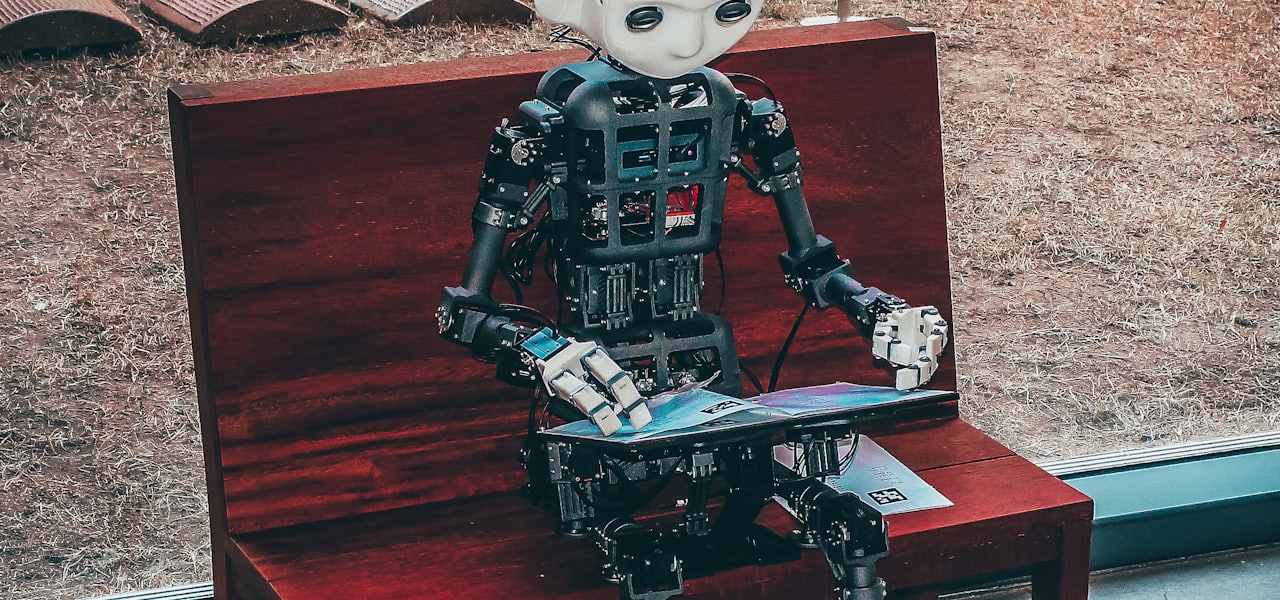
AI anthropomorphism is the attribution of human-like feelings, mental states, and behavioral characteristics to artificial intelligence systems. Factors related to the user of the AI – such as culture, age, education, gender, and personality traits – are also important determinants of the strength of anthropomorphic effects. Since the earliest days of AI development, humans have interpreted machine outputs through anthropomorphic frameworks, but the recent emergence of generative AI has amplified these tendencies. In research and engineering, there is a distinction between anthropomorphism and anthropomorphic design. The former is an innate human tendency toward non-human entities. The latter is the scientific community effort to “design anthropomorphism”. Such a design can involve the manipulation of cues, including AI appearance, behaviour and language. Contemporary AI systems today can generate extremely human-like outputs and are often designed specifically to do so, meaning that their anthropomorphic effects can be especially powerful. In some cases, anthropomorphism is accompanied with explicit beliefs that AI systems are capable of empathy, goodwill, understanding, or consciousness. == Background == === In early AIs === Views of artificial agents possessing a human-like intelligence have existed since the early development of computers in the mid-1900s. The use of the human mind as a metaphor for understanding the workings of machine systems was prevalent among researchers in the early days of computer science, with multiple influential works widely distributing the idea of intelligent machines. Among the most widely cited papers of this period was Alan Turing's "Computing Machinery and Intelligence" in which he introduced the Turing Test, stating that a machine was intelligent if it could produce conversation that was indistinguishable from that of a human. These academic works in the 1940s and 1950s gave early credibility to the idea that machine workings could be thought of similarly to human minds. The public quickly came to view artificial systems similarly, with often exaggerated conceptions of the capabilities of early machines. Among the most well-known demonstrations of this was through the chatbot ELIZA designed by Joseph Weizenbaum in 1966. ELIZA responded to user inputs with a rudimentary text-processing approach that could not be considered anything resembling true understanding of the inputs, yet users, even when operating with full conscious knowledge of ELIZA's limitations, often began to ascribe motivation and understanding to the program's output. Weizenbaum later wrote, "I had not realized ... that extremely short exposures to a relatively simple computer program could induce powerful delusional thinking in quite normal people." Comparisons between the intellectual capabilities of artificial intelligence and human intelligence were continually intensified by the attempts of computer scientists to develop machines that could perform human tasks at a level equal to or better than humans. A symbolic turning point was achieved in 1997, when IBM's chess supercomputer Deep Blue defeated then-world champion Garry Kasparov in a highly publicized six-game match. The defeat of a human by a machine for the first time in chess – a game viewed as a canonical example of human intellect – and the media attention surrounding the match led to a significant shift, where views of parallels between human and artificial intelligence moved from abstract speculation to being concretely demonstrated. A similar achievement was reached in the board game Go in 2017, when the program AlphaGo defeated world top-ranked Ke Jie. === Large language models === The AI boom of the 2020s brought about the widespread emergence of generative AI; in particular, chatbots such as ChatGPT, Gemini, and Claude based on large language models (LLMs) have become increasingly pervasive in everyday society. These systems are notable for the fact that they are able to respond to a wide range of prompts across contexts while producing strikingly human-like outputs – research has shown that humans are often unable to distinguish human-generated text from AI-generated text, and modern AI chatbots have formally been shown to pass the Turing test. As such, the anthropomorphic effects of AI are more powerful than ever. Given that LLMs have brought AI into the technological mainstream, considerable scientific effort has been devoted in recent years to understand existing and potential ramifications of AI in the public sphere; the prevalence and effects of anthropomorphism is one of those domains where much of this effort has been directed. == Current anthropomorphic attributions == === In the general public === Surveys have shown that a substantial portion of the public attributes human-like qualities to AI. In one sample of U.S. adults from 2024, two-thirds of people believed that ChatGPT is possibly conscious on some level, though other research has shown that the public still views the likelihood itself of AI consciousness as comparatively low. Another study conducted in 2025 found that women, people of color, and older individuals were most likely to anthropomorphize AI, as well as that – in general – humans view AIs as warm and competent, and anthropomorphic attributions to AI had increased by 34% in the past year. A YouGov poll reported that 46% of Americans believe that people should display politeness to AI chatbots by saying "please" and "thank you", demonstrating the application of social norms to AI. These beliefs extend to behavior, where majorities of AI users claim to always be polite to chatbots; of those who behave politely, most say they do so simply because it is the "nice" thing to do. In many recent cases, humans have developed robust interpersonal bonds with AI systems. For example: users of social chatbots like Replika and Character.ai have been documented to fall in love with the AIs, or to otherwise treat the AIs as intimate companions, and it has become increasingly common for individuals to use LLMs like ChatGPT as therapists. Chatbots are able to produce responses deeply attuned to users, as they are often designed to maximize agreeableness and mirror users' emotions; this can create compelling illusions of intimacy. === In the research community === In many cases, even AI researchers anthropomorphize AI systems in some capacity. Among the most extreme and well-publicized of these instances occurred in 2022, when engineer Blake Lemoine publicly claimed that Google's LLM LaMDA was conscious. Lemoine published the transcript of a conversation he had had with LaMDA regarding self identity and morality which he claimed was evidence of its sentience; he asserted that LaMDA was "a person" as defined by the United States Constitution and compared its mental capability to that of a 7- or 8-year-old. Lemoine's claims were widely dismissed by the scientific community and by Google itself, which described Lemoine's conclusions as "wholly unfounded" and fired him on the grounds that he had violated policies "to safeguard product information". It is much more common that AI researchers unintentionally imply humanness of AI through the ordinary use of anthropomorphic language to describe nonhuman agents. This kind of language, which Daniel Dennett coined the "intentional stance", is very common in everyday life in a variety of different contexts (e.g., "My computer doesn't want to turn on today"). For AI agents that may actually appear to very closely replicate some human abilities, however, the casual use of such anthropomorphic language in research has been scrutinized for being potentially misleading to the public. As early as 1976, Drew McDermott criticized the research community for the use of "wishful mnemonics", where AIs were referred to with terms like "understand" and "learn". In the LLM era, these criticisms have further intensified, with the negative effects of AI anthropomorphism in the public posing an especially salient danger given the elevated accessibility of modern AI. In some cases, the use of anthropomorphic language for AI is not unintentional, but is willfully used by researchers in order to promote better understanding of the brain – the idea being that, as AI can be functionally similar in some ways to the human brain, we may gain new insights and ideas from treating AI as a kind of model of the brain's workings. In particular, deep neuronal networks (DNNs) are often explicitly compared to the human brain, and significant advances in DNN research have stirred considerable enthusiasm about the ability of AI to emulate the human abilities. Caution has been urged in this domain as well, however; the use of anthropomorphic language can mask important differences that fundamentally distinguish AI from human intelligence. When it comes to DNNs, for example, it has been pointed out that they are still structurally quite different
Film-out
Film-out is the process in the computer graphics, video production and filmmaking disciplines of transferring images or animation from videotape or digital files to a traditional film print. Film-out is a broad term that encompasses the conversion of frame rates, color correction, as well as the actual printing, also called scannior recording. The film-out process is different depending on the regional standard of the master videotape in question – NTSC, PAL, or SECAM – or likewise on the several emerging region-independent formats of high definition video (HD video); thus each type is covered separately, taking into account regional film-out industries, methods and technical considerations. == Live action video == Many modern documentaries and low-budget films are shot on videotape or other digital video media, instead of film stock, and completed as digital video. Video production means substantially lower costs than 16 mm or 35 mm film production on all levels. Until recently, the relatively low cost of video ended when the issue of a theatrical presentation was raised, which required a print for film projection. With the growing presence of digital projection, this is becoming less of a factor. === Standard definition (SD) video === Film-out of standard-definition video – or any source that has an incompatible frame rate – is the up-conversion of video media to film for theatrical viewing. The video-to-film conversion process consists of two major steps: first, the conversion of video into digital film frames which are then stored on a computer or on HD videotape; and secondly, the printing of these digital film frames onto actual film. To understand these two steps, it is important to understand how video and film differ. Film (sound film, at least) has remained unchanged for almost a century and creates the illusion of moving images through the rapid projection of still images, frames, upon a screen, typically 24 per second. Traditional interlaced SD video has no real frame rate, (though the term frame is applied to video, it has a different meaning). Instead, video consists of a very fast succession of horizontal lines that continually cascade down the television screen – streaming top to bottom, before jumping back to the top and then streaming down to the bottom again, repeatedly, almost 60 alternating screen-fulls every second for NTSC, or exactly 50 such screen-fulls per second for PAL and SECAM. Since visual movement in video is infused in this continuous cascade of scan lines, there is no discrete image or real frame that can be identified at any one time. Therefore, when transferring video to film, it is necessary to invent individual film frames, 24 for every second of elapsed time. The bulk of the work done by a film-out company is this first step, creating film frames out of the stream of interlaced video. Each company employs its own (often proprietary) technology for turning interlaced video into high-resolution digital video files of 24 discrete images every second, called 24 progressive video or 24p. The technology must filter out all the visually unappealing artifacting that results from the inherent mismatch between video and film movement. Moreover, the conversion process usually requires human intervention at every edit point of a video program, so that each type of scene can be calibrated for maximum visual quality. The use of archival footage in video especially calls for extra attention. Step two, the scanning to film, is the rote part of the process. This is the mechanical step where lasers print each of the newly created frames of the 24p video, stored on computer files or HD videotape, onto rolls of film. Most companies that do film-out, do all the stages of the process themselves for a lump sum. The job includes converting interlaced video into 24p and often a color correction session – (calibrating the image for theatrical projection), before scanning to physical film, (possibly followed by color correction of the film print made from the digital intermediary) – is offered. At the very least, film-out can be understood as the process of converting interlaced video to 24p and then scanning it to film. ==== NTSC video ==== NTSC is the most challenging of the formats when it comes to standards conversion and, specifically, converting to film prints. NTSC runs at the approximate rate of 29.97 video frames (consisting of two interlaced screen-fulls of scan lines, called fields, per frame) per second. In this way, NTSC resolves actual live action movement at almost – but not quite – 60 alternating half-resolution images every second. Because of this 29.97 rate, no direct correlation to film frames at 24 frames per second can be achieved. NTSC is hardest to reconcile with film, thus motivating its own unique processes. ==== PAL and SECAM video ==== PAL and SECAM run at 25 interlaced video frames per second, which can be slowed down or frame-dropped, then deinterlaced, to correlate frame for frame with film running at 24 actual frames per second. PAL and SECAM are less complex and demanding than NTSC for film-out. PAL and SECAM conversions do agitate, though, with the unpleasant choice between slowing down video (and audio pitch, noticeably) by four percent, from 25 to 24 frames per second, in order to maintain a 1:1 frame match, slightly changing the rhythm and feel of the program; or maintaining original speed by periodically dropping frames, thereby creating jerkiness and possible loss of vital detail in fast-moving action or precise edits. === High definition (HD) digital video === High definition digital video can be shot at a variety of frame rates, including 29.97 interlaced (like NTSC) or progressive; or 25 interlaced (like PAL) or progressive; or even 24-progressive (just like film). HD, if shot in 24-progressive, scans nearly perfectly to film without the need for a frame or field conversion process. Other issues remain though, based on the different resolutions, color spaces, and compression schemes that exist in the high-definition video world. == Computer graphics and animation == Artists working with CGI-Computer-generated imagery animation computers create pictures frame by frame. Once the finished product is done, the frames are outputted, normally in a DPX file. These picture data files can then be put on to film using a film recorder for film out. SGI computers started the high-end CGI-Computer-generated imagery animation systems, but with faster computers and the growth of Linux-based systems, many others are on the market now. Movies fully rendered and animated in CGI such as Toy Story, and Antz utilize the film-out method to produce 35mm copies for archival and release prints. Most CGI work is done in 2K Display resolution files (about the size of QXGA) and then output to the Film-out device for creation of 35 mm elements. With 4K Display resolution digital intermediates on the rise, newer types of film-out recorders are being developed to accept 4k resolution files. A 2K movie requires a Storage Area Network storage several terabytes in size to be properly stored and played out. Computer graphics files are handled the same way but in single frames and may use DPX, TIFF or other file formats. == Digital intermediates == Film-out-recording is the last step of digital intermediate workflow. DPX files that were scanned on a motion picture film scanner are stored on a storage area network (often abbreviated as SAN). The scanned DPX footage is edited and composited-FX on workstations, then mastered back on film. Film restoration is also done this way. A "film intermediate" is an analog variation of a digital intermediate, where a project shot on digital video is printed onto film stock and transferred back to digital video to emulate film. The term was coined after it was used on the Oscar-winning 2012 short film "Curfew". The process was also used on the films Dune (2021) and The Batman (2022). == Images for graphic design and print industries == The days of newspapers and magazines shooting 35mm film are almost gone. Digital cameras can now shoot all the images needed, storing them as files (e.g. JPEG, DPX or another format) that are readily edited prior to use. Once the final copy is approved, it can be filmed out for publishing. Digital stills are not the only way to get pictures used in the graphic design and print industries. Film scanners and computer graphics programs are also common sources for graphic design and print industries. == Types of devices == The following devices are used in film-out processes: CRT recorder. Camera and a special TV display Kinescope – early type Electronic Video Recording or EVR – early type EBR Electron Beam Film Recorder 16 mm by 3M Laser film recorder, like Kodak's high-end Lightning II recorder and Arri's Arrilaser. DLP Film recorder, like Cinevation's real-time Cinevator. == History == Lately it has become possible to transfer video images, inclu
DoorDash
DoorDash, Inc. is an American company operating online food ordering and food delivery. It trades under the symbol DASH. With a 56% market share, DoorDash is the largest food delivery platform in the United States. It also has a 60% market share in the convenience delivery category. As of December 31, 2020, the platform was used by 450,000 merchants, 20 million consumers, and had over one million delivery couriers. Founded by Tony Xu, Andy Fang, Stanley Tang and Evan Moore, DoorDash made its debut on the Fortune 500 list in 2024, ranking No. 443. DoorDash has been sued for or held legally liable for withholding tips, reducing tip transparency, antitrust price manipulation, listing restaurants without permission, misclassifying workers, withholding sick time, and illegally selling personal data. As of April 2026, DoorDash operates in the United States (including Puerto Rico), Canada, Australia, and New Zealand. Through its subsidiaries Deliveroo and Wolt, the company also operates across Europe, as well as in Azerbaijan, Georgia, Israel, Kazakhstan, Kuwait, and the United Arab Emirates. == History == In January 2013, Stanford University students Tony Xu, Stanley Tang, Andy Fang and Evan Moore launched PaloAltoDelivery.com in Palo Alto, California. In the summer of 2013, it received US$120,000 in seed money from Y Combinator in exchange for a 7% stake. It incorporated as DoorDash in June 2013. DoorDash's first partnership with a fast food burger restaurant chain was in April 2016, when it partnered with CKE Restaurants, parent company of Carl's Jr. and Hardee's, for food delivery. In December 2017, DoorDash announced its partnership with Wendy's for delivery from its restaurants. In December 2018, DoorDash overtook Uber Eats to hold the second position in total US food delivery sales, behind GrubHub. By March 2019, it had exceeded GrubHub in total sales, at 27.6% of the on-demand delivery market. By early 2019, DoorDash was the largest food delivery provider in the U.S., as measured by consumer spending. In October 2019, DoorDash opened its first ghost kitchen, DoorDash Kitchen, in Redwood City, California, with four restaurants operating at the location. By June 2020, DoorDash had raised more than $2.5 billion over several financing rounds from investors including Y Combinator, Charles River Ventures, SV Angel, Khosla Ventures, Sequoia Capital, SoftBank Group, GIC, and Kleiner Perkins. DoorDash announced a partnership with KFC in September 2020, followed by Taco Bell in October 2020. In November 2020, DoorDash announced the opening of its first physical restaurant location, partnering up with Bay Area restaurant Burma Bites to offer delivery and pick-up orders. In December 2020, it became a public company via an initial public offering, raising $3.37 billion. In November 2021, DoorDash acquired Finland's Wolt for €7bn. In August 2022, DoorDash announced it would end its partnership with Walmart in September, ending the companies' cooperation agreement from 2018. In November 2022, DoorDash announced plans to lay off 1,250 corporate employees, or about six percent of its workforce, to rein in expenses. In June 2023, DoorDash announced it would give its drivers the option of earning an hourly minimum wage instead of being paid per delivery. However, drivers are only paid hourly when on an active delivery. In September 2023, the company transferred its stock listing from the New York Stock Exchange to the Nasdaq. On December 18, 2023, DoorDash was added to the Nasdaq-100 index. In March 2025, DoorDash announced a partnership with Klarna, a Buy Now, Pay Later (BNPL) service, letting customers schedule small payments over a set period of time. DoorDash received widespread criticism from this decision, including internet mockery, given concerns about the increase of household debt in America. In 2025, DoorDash acquired the UK-based delivery service Deliveroo for $3.88 billion. The combined company operates in 40 countries and serves 50 million users monthly. In September 2025, DoorDash and Ace Hardware (the largest hardware cooperative) announced their partnership to offer delivery for home use products from over 4,000 Ace locations. == Lawsuits against DoorDash == === 2017 class-action lawsuit for misclassifying workers === In 2017, a class-action lawsuit was filed against DoorDash for allegedly misclassifying delivery drivers in California and Massachusetts as independent contractors. In 2022, a tentative settlement was reached in which DoorDash would pay $100 million total, with $61 million going to over 900,000 drivers, paying out just over $130 per driver, and $28 million for the lawyers. Gizmodo criticized the settlement, noting that the $413 million that DoorDash CEO Tony Xu received the previous year was one of the largest CEO compensation packages of all time. === 2019 data breach lawsuit === On May 4, 2019, DoorDash confirmed 4.9 million customers, delivery workers and merchants had sensitive information stolen via a data breach. Those who joined the platform after April 5, 2018, were unaffected by the breach. A class-action lawsuit for the breach was filed against DoorDash in October 2019. === Withholding of tips and subsequent class-action lawsuits === In July 2019, the company's tipping policy was criticized by The New York Times, and later The Verge and Vox and Gothamist. Drivers receive a guaranteed minimum per order that is paid by DoorDash by default. When a customer added a tip, instead of going directly to the driver, it first went to the company to cover the guaranteed minimum. Drivers then only directly received the part of the tip that exceeded the guaranteed minimum per order. In January 2020, it was reported that DoorDash had lied about skimming tips from its drivers, causing them to earn an average of $1.45 an hour after expenses, and that after the company had allegedly overhauled its tipping system, DoorDash was still manipulating per-delivery payouts at the expense of drivers. A DoorDash customer filed a class action lawsuit against the company for its "materially false and misleading" tipping policy. The case was referred to arbitration in August 2020. Under pressure, the company revised its policy. The company settled a lawsuit with District of Columbia Attorney General Karl Racine for $2.5 million, with funds going to deliverers, the government, and to charity. ==== 2021 driver strike for tip transparency ==== In July 2021, DoorDash drivers went on strike to protest lack of tip transparency and to ask for higher pay. At the time of the strike, and, as of June 2022, DoorDash did not allow drivers to see the full tip amounts prior to accepting a delivery in the app. If customers tip over a set amount for the order total, Doordash hides a portion of the tip until the delivery is complete. The strike occurred after DoorDash rewrote its code to cut off access to Para, a third-party app that drivers had been using to see the full tip amounts. ==== 2025 class-action lawsuit settlement ==== In 2025, DoorDash agreed to pay around $17 million for "misleading both consumers and delivery workers" with tips being docked from drivers' pay instead of directly going to drivers. === 2020 antitrust litigation === In April 2020, in the case of Davitashvili v. GrubHub Inc. DoorDash, Grubhub, Postmates, and Uber Eats were accused of monopolistic power by only listing restaurants on its apps if the restaurant owners signed contracts which include clauses that require prices be the same for dine-in customers as for customers receiving delivery. The plaintiffs stated that this arrangement increases the cost for dine-in customers, as they are required to subsidize the cost of delivery; and that the apps charge "exorbitant" fees, which range from 13% to 40% of revenue, while the average restaurant's profit ranges from 3% to 9% of revenue. The lawsuit seeks treble damages, including for overcharges, since April 14, 2016, for dine-in and delivery customers in the United States at restaurants using the defendants’ delivery apps. Although several preliminary documents in the case have now been filed, a trial date has not yet been set. === Litigation for illegal unauthorized restaurant listing === In May 2021, DoorDash was criticized for unauthorized listings of restaurants who had not given permission to appear on the app. The company was sued by Lona's Lil Eats in St. Louis, with the lawsuit claiming that DoorDash had listed them without permission, then prevented any orders to the restaurant from going through and redirecting customers to other restaurants instead, because Lona's was "too far away," when in reality it had not paid DoorDash a fee for listing. This aspect of DoorDash's business practice is illegal in California. === 2021 lawsuit by the city of Chicago === In August 2021, the city of Chicago sued DoorDash and GrubHub. According to Chicago mayor Lori Lightfoot, the companies broke the law by using "unfair and deceptive t
Bin picking
Bin picking (also referred to as random bin picking) is a core problem in computer vision and robotics. The goal is to have a robot with sensors and cameras attached to it pick-up known objects with random poses out of a bin using a suction gripper, parallel gripper, or other kind of robot end effector. Early work on bin picking made use of Photometric Stereo in recovering the shapes of objects and to determine their orientation in space. Amazon previously held a competition focused on bin picking referred to as the "Amazon Picking Challenge", which was held from 2015 to 2017. The challenge tasked entrants with building their own robot hardware and software that could attempt simplified versions of the general task of picking and stowing items on shelves. The robots were scored by how many items were picked and stowed in a fixed amount of time. The first Amazon Robotics challenge was won by a team from TU Berlin in 2015, followed by a team from TU Delft and the Dutch company "Fizyr" in 2016. The last Amazon Robotics Challenge was won by the Australian Centre for Robotic Vision at Queensland University of Technology with their robot named Cartman. The Amazon Robotics/Picking Challenge was discontinued following the 2017 competition. Although there can be some overlap, bin picking is distinct from "each picking" and the bin packing problem.
Evolutionary robotics
Evolutionary robotics is an embodied approach to Artificial Intelligence (AI) in which robots are automatically designed using Darwinian principles of natural selection. The design of a robot, or a subsystem of a robot such as a neural controller, is optimized against a behavioral goal (e.g. run as fast as possible). Usually, designs are evaluated in simulations as fabricating thousands or millions of designs and testing them in the real world is prohibitively expensive in terms of time, money, and safety. An evolutionary robotics experiment starts with a population of randomly generated robot designs. The worst performing designs are discarded and replaced with mutations and/or combinations of the better designs. This evolutionary algorithm continues until a prespecified amount of time elapses or some target performance metric is surpassed. Evolutionary robotics methods are particularly useful for engineering machines that must operate in environments in which humans have limited intuition (nanoscale, space, etc.). Evolved simulated robots can also be used as scientific tools to generate new hypotheses in biology and cognitive science, and to test old hypothesis that require experiments that have proven difficult or impossible to carry out in reality. == History == In the early 1990s, two separate European groups demonstrated different approaches to the evolution of robot control systems. Dario Floreano and Francesco Mondada at EPFL evolved controllers for the Khepera robot. Adrian Thompson, Nick Jakobi, Dave Cliff, Inman Harvey, and Phil Husbands evolved controllers for a Gantry robot at the University of Sussex. However the body of these robots was presupposed before evolution. The first simulations of evolved robots were reported by Karl Sims and Jeffrey Ventrella of the MIT Media Lab, also in the early 1990s. However these so-called virtual creatures never left their simulated worlds. The first evolved robots to be built in reality were 3D-printed by Hod Lipson and Jordan Pollack at Brandeis University at the turn of the 21st century.
Non-photorealistic rendering
Non-photorealistic rendering (NPR) is an area of computer graphics that focuses on enabling a wide variety of expressive styles for digital art, in contrast to traditional computer graphics, which focuses on photorealism. NPR is inspired by other artistic modes such as painting, drawing, technical illustration, and animated cartoons. NPR has appeared in movies and video games in the form of cel-shaded animation (also known as "toon" shading) as well as in scientific visualization, architectural illustration and experimental animation. == History and criticism of the term == The term non-photorealistic rendering is believed to have been coined by the SIGGRAPH 1990 papers committee, who held a session entitled "Non Photo Realistic Rendering". The term has received some criticism: The term "photorealism" has different meanings for graphics researchers (see "photorealistic rendering") and artists. For artists—who are the target consumers of NPR techniques—it refers to a school of painting that focuses on reproducing the effect of a camera lens, with all the distortion and hyper-reflections that it creates. For graphics researchers, however, it refers to an image that is visually indistinguishable from reality. In fact, graphics researchers lump the kinds of visual distortions that are used by photorealist painters into "non-photorealism". Describing something by what it is not is problematic. Equivalent (made-up) comparisons might be "non-elephant biology" or "non-geometric mathematics". NPR researchers have stated that they expect the term will disappear eventually and be replaced by the now more general term "computer graphics", with "photorealistic graphics" being the term used to describe "traditional" computer graphics. Many techniques that are used to create 'non-photorealistic' images are not rendering techniques. They are modelling techniques, or post-processing techniques. While the latter are coming to be known as 'image-based rendering', sketch-based modelling techniques, cannot technically be included under this heading, which is very inconvenient for conference organisers. The first conference on non-photorealistic animation and rendering included a discussion of possible alternative names. Among those suggested were "expressive graphics", "artistic rendering", "non-realistic graphics", "art-based rendering", and "psychographics". All of these terms have been used in various research papers on the topic, but the "non-photorealistic" term seems to have nonetheless taken hold. The first technical meeting dedicated to NPR was the ACM-sponsored Symposium on Non-Photorealistic Rendering and Animation(NPAR) in 2000. NPAR is traditionally co-located with the Annecy Animated Film Festival, running on even numbered years. From 2007 onward, NPAR began to also run on odd-numbered years, co-located with ACM SIGGRAPH. == 3D == Three-dimensional NPR is the style that is most commonly seen in video games and movies. The output from this technique is almost always a 3D model that has been modified from the original input model to portray a new artistic style. In many cases, the geometry of the model is identical to the original geometry, and only the material applied to the surface is modified. With increased availability of programmable GPU's, shaders have allowed NPR effects to be applied to the rasterised image that is to be displayed to the screen. The majority of NPR techniques applied to 3D geometry are intended to make the scene appear two-dimensional. NPR techniques for 3D images include cel shading and Gooch shading. Many methods can be used to draw stylized outlines and strokes from 3D models, including occluding contours and Suggestive contours. For enhanced legibility, the most useful technical illustrations for technical communication are not necessarily photorealistic. Non-photorealistic renderings, such as exploded view diagrams, greatly assist in showing placement of parts in a complex system. Cartoon rendering, also called cel shading or toon shading, is a non-photorealistic rendering technique used to give 3D computer graphics a flat, cartoon-like appearance. Its defining feature is the use of distinct shading colors rather than smooth gradients, producing a look reminiscent of comic books or animated films. This technique is often used to blend 3D objects and environments with 2D hand-animated elements while maintaining a consistent look. Treasure Planet movie by Disney is an example of blending these techniques. == 2D == The input to a two dimensional NPR system is typically an image or video. The output is a typically an artistic rendering of that input imagery (for example in a watercolor, painterly or sketched style) although some 2D NPR serves non-artistic purposes e.g. data visualization. The artistic rendering of images and video (often referred to as image stylization) traditionally focused upon heuristic algorithms that seek to simulate the placement of brush strokes on a digital canvas. Arguably, the earliest example of 2D NPR is Paul Haeberli's 'Paint by Numbers' at SIGGRAPH 1990. This (and similar interactive techniques) provide the user with a canvas that they can "paint" on using the cursor — as the user paints, a stylized version of the image is revealed on the canvas. This is especially useful for people who want to simulate different sizes of brush strokes according to different areas of the image. Subsequently, basic image processing operations using gradient operators or statistical moments were used to automate this process and minimize user interaction in the late nineties (although artistic control remains with the user via setting parameters of the algorithms). This automation enabled practical application of 2D NPR to video, for the first time in the living paintings of the movie What Dreams May Come (1998). More sophisticated image abstractions techniques were developed in the early 2000s harnessing computer vision operators e.g. image salience, or segmentation operators to drive stroke placement. Around this time, machine learning began to influence image stylization algorithms notably image analogy that could learn to mimic the style of an existing artwork. The advent of deep learning has re-kindled activity in image stylization, notably with neural style transfer (NST) algorithms that can mimic a wide gamut of artistic styles from single visual examples. These algorithms underpin mobile apps capable of the same e.g. Prisma In addition to the above stylization methods, a related class of techniques in 2D NPR address the simulation of artistic media. These methods include simulating the diffusion of ink through different kinds of paper, and also of pigments through water for simulation of watercolor. == Artistic rendering == Artistic rendering is the application of visual art styles to rendering. For photorealistic rendering styles, the emphasis is on accurate reproduction of light-and-shadow and the surface properties of the depicted objects, composition, or other more generic qualities. When the emphasis is on unique interpretive rendering styles, visual information is interpreted by the artist and displayed accordingly using the chosen art medium and level of abstraction in abstract art. In computer graphics, interpretive rendering styles are known as non-photorealistic rendering styles, but may be used to simplify technical illustrations. Rendering styles that combine photorealism with non-photorealism are known as hyperrealistic rendering styles. == Notable films and games == This section lists some seminal uses of NPR techniques in films, games and software. See cel-shaded animation for a list of uses of toon-shading in games and movies.
Enterprise resource planning
Enterprise resource planning (ERP) is the integrated management of main business processes, often in real time and mediated by software and technology. ERP is usually referred to as a category of business management software—typically a suite of integrated applications—that an organization can use to collect, store, manage and interpret data from many business activities. The finance module in particular is essential to a suite of applications meeting the definition of an ERP system. The finance module provides the system of record for the organisation; recording the commercial impact of the business operations in the General Ledger. ERP systems can be local-based or cloud-based. Cloud-based applications have grown rapidly since the early 2010s due to the increased efficiencies arising from information being readily available from any location with Internet access. However, ERP differs from integrated business management systems by including planning all resources that are required in the future to meet business objectives. This includes plans for getting suitable staff and manufacturing capabilities for future needs. ERP provides an integrated and continuously updated view of core business processes, typically using a shared database managed by a database management system. ERP systems track business resources—cash, raw materials, production capacity—and the status of business commitments: orders, purchase orders, and payroll. The applications that make up the system share data across various departments (manufacturing, purchasing, sales, accounting, etc.) that provide the data. ERP facilitates information flow between all business functions and manages connections to outside stakeholders. Estimates of the size of the global ERP market range between USD $78 and $81 billion in 2026 . Though early ERP systems focused on large enterprises, smaller enterprises increasingly use ERP systems. The ERP system integrates varied organizational systems and facilitates error-free transactions and production, thereby enhancing the organization's efficiency. However, developing an ERP system differs from traditional system development. ERP systems run on a variety of computer hardware and network configurations, typically using a database as an information repository. == Origin == Business and technology research and advisory firm Gartner is credited for first using the acronym ERP in the 1990s. The term captured a functional extension of two manufacturing-based concepts, material requirements planning (MRP) and manufacturing resource planning (MRP II). Without replacing these terms, ERP came to represent a larger whole that reflected the evolution of application integration beyond manufacturing. Not all ERP packages are developed from a manufacturing core; ERP vendors variously began assembling their packages with finance-and-accounting, maintenance, and human-resource components. By the mid-1990s ERP systems addressed all core enterprise functions. Governments and non–profit organizations also began to use ERP systems. An "ERP system selection methodology" is a formal process for selecting an enterprise resource planning (ERP) system. Existing methodologies include: Kuiper's funnel method, Dobrin's three-dimensional (3D) web-based decision support tool, and the Clarkston Potomac methodology. == Expansion == ERP systems experienced rapid growth in the 1990s. Because of the year 2000 problem many companies took the opportunity to replace their old systems with ERP. ERP systems initially focused on automating back office functions that did not directly affect customers and the public. Front office functions, such as customer relationship management (CRM), dealt directly with customers, or e-business systems such as e-commerce and e-government—or supplier relationship management (SRM) became integrated later, when the internet simplified communicating with external parties. "ERP II" was coined in 2000 in an article by Gartner Publications entitled ERP Is Dead—Long Live ERP II. It describes web–based software that provides real–time access to ERP systems to employees and partners (such as suppliers and customers). The ERP II role expands traditional ERP resource optimization and transaction processing. Rather than just manage buying, selling, etc.—ERP II leverages information in the resources under its management to help the enterprise collaborate with other enterprises. ERP II is more flexible than the first generation ERP. Rather than confine ERP system capabilities within the organization, it goes beyond the corporate walls to interact with other systems. Enterprise application suite is an alternate name for such systems. ERP II systems are typically used to enable collaborative initiatives such as supply chain management (SCM), customer relationship management (CRM) and business intelligence (BI) among business partner organizations through the use of various electronic business technologies. The large proportion of companies are pursuing a strong managerial targets in ERP system instead of acquire an ERP company. Developers now make more effort to integrate mobile devices with the ERP system. ERP vendors are extending ERP to these devices, along with other business applications, so that businesses don't have to rely on third-party applications. As an example, the e-commerce platform Shopify was able to make ERP tools from Microsoft and Oracle available on its app in October 2021. Technical stakes of modern ERP concern integration—hardware, applications, networking, supply chains. ERP now covers more functions and roles—including decision making, stakeholders' relationships, standardization, transparency, globalization, etc. == Functional areas == An ERP system covers the following common functional areas. In many ERP systems, these are called and grouped together as ERP modules: Financial accounting: general ledger, fixed assets, payables including vouchering, matching and payment, receivables and collections, cash management, financial consolidation Management accounting: budgeting, costing, cost management, activity based costing, billing, invoicing (optional) Human resources: recruiting, training, rostering, payroll, benefits, retirement and pension plans, diversity management, retirement, separation Manufacturing: engineering, bill of materials, work orders, scheduling, capacity, workflow management, quality control, manufacturing process, manufacturing projects, manufacturing flow, product life cycle management Order processing: order to cash, order entry, credit checking, pricing, available to promise, inventory, shipping, sales analysis and reporting, sales commissioning Supply chain management: supply chain planning, supplier scheduling, product configurator, order to cash, purchasing, inventory, claim processing, warehousing (receiving, putaway, picking and packing) Project management: project planning, resource planning, project costing, work breakdown structure, billing, time and expense, performance units, activity management Customer relationship management (CRM): sales and marketing, commissions, service, customer contact, call center support – CRM systems are not always considered part of ERP systems but rather business support systems (BSS) Supplier relationship management (SRM): suppliers, orders, payments. Data services: various "self-service" interfaces for customers, suppliers or employees Management of school and educational institutes. Contract management: creating, monitoring, and managing contracts, reducing administrative burdens and minimising legal risks. These modules often feature contract templates, electronic signature capabilities, automated alerts for contract milestones, and advanced search functionality. === GRP – ERP use in government === Government resource planning (GRP) is the equivalent of an ERP for the public sector and an integrated office automation system for government bodies. The software structure, modularization, core algorithms and main interfaces do not differ from other ERPs, and ERP software suppliers manage to adapt their systems to government agencies. Both system implementations, in private and public organizations, are adopted to improve productivity and overall business performance in organizations, but comparisons (private vs. public) of implementations shows that the main factors influencing ERP implementation success in the public sector are cultural. == Best practices == Most ERP systems incorporate best practices. This means the software reflects the vendor's interpretation of the most effective way to perform each business process. Systems vary in how conveniently the customer can modify these practices. Use of best practices eases compliance with requirements such as International Financial Reporting Standards, Sarbanes–Oxley, or Basel II. They can also help comply with de facto industry standards, such as electronic funds transfer. This is because the procedure can be readily